Beijing
China's Historic Capital — Forbidden City, Great Wall & More
China's Historic Capital — Forbidden City, Great Wall & More
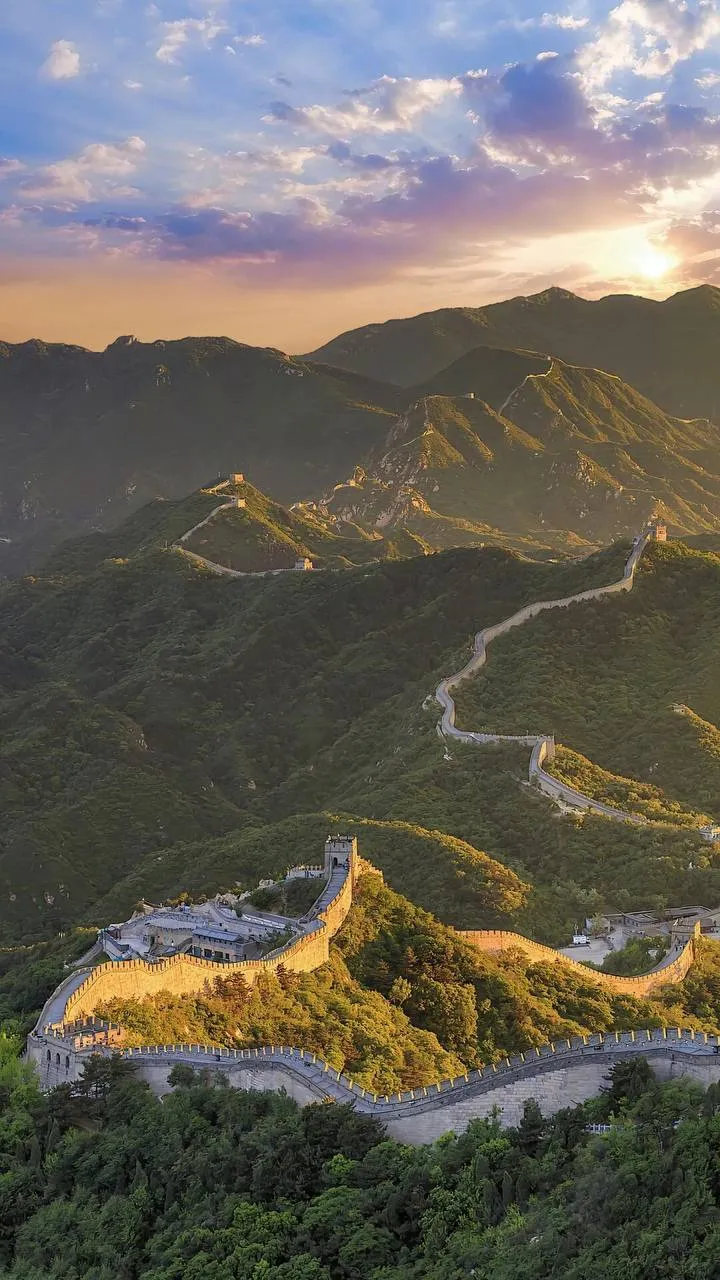
Beijing, China's capital for over eight centuries, is where imperial grandeur collides with the relentless momentum of a 21-million-person megacity. The Forbidden City's vermillion walls, the morning rituals at the Temple of Heaven, the vertigo of the Great Wall disappearing into distant mountains — these are not attractions you visit so much as forces you reckon with. The city demands a minimum of three full days, rewards those who stay five, and leaves no visitor unchanged by its scale and contradiction.
TL;DR — Quick Guide to Beijing:
The air is different here. In spring, sand blows in from the Gobi. In autumn, the sky turns a blue so clean it looks artificial. Locals say you haven't truly lived until you've eaten Peking duck in Beijing, cycled the Ming-era city walls at dusk, and taken a dawn walk through the Temple of Heaven forecourt where thousands of retired Beijingers practice tai chi before the city wakes. This is a capital with a very particular temperament — proud, blunt, and endlessly surprising.
A 180-acre palace complex of 980 buildings across 20 courtyards, political heart of China for five centuries. Arrive before 8:30 AM to have the Eastern Section nearly to yourself. Budget 3-4 hours minimum — it is genuinely impossible to rush.
Fully restored, dramatically forested, less crowded than Badaling. The toboggan ride down is an unexpected delight. Sunrise visits give you empty ramparts and views stretching 30km in clear weather.
Where emperors prayed for harvests and where, at dawn, thousands of locals gather to practice tai chi, dance, and play board games in the forecourt. One of Beijing's most unexpectedly alive and cinematic spaces.
April to May and September to October are the ideal windows — cool mornings, clear skies, and the city at its most photogenic. October in particular is spectacular: autumn leaves along the moat walls of the Forbidden City, blue skies, and cool evenings. Summer (June–August) brings crowds, heat, and humidity. Winter (December–February) can be magical — empty palaces, steaming dumplings on every corner, and a quality of light through the smog that photographers covet. Spring brings sandstorms from the Gobi, usually in March and April, though these have become less severe in recent years.
Beijing Capital International Airport (PEK) is the main gateway, 30km northeast of the city center. A second airport, Daxing International Airport (PKX), serves some international and most domestic routes — connected to the city via high-speed metro and the Beijing–Xiong'an railway. High-speed trains arrive at Beijing Railway Station, Beijing Fengtai Station, and Beijingqing Railway Station from Shanghai (4.5 hours), Xi'an (4.5 hours), and virtually every major Chinese city. Domestic flights within China are competitive with rail for distances over 1,000km.
Beijing needs at minimum 3 full days. Plan 5 days if you want to cover the highlights properly — the Forbidden City alone deserves a full day.
April to May and September to October are ideal. October is especially spectacular with autumn leaves and clear blue skies around the Forbidden City.
Mutianyu is the best choice — fully restored, dramatically forested, and less crowded than Badaling. It also has a toboggan ride down.
Mid-range meals cost $15–25 per person; luxury hotels start from $200 per night. Entrance fees are modest — the Forbidden City charges about $7 and is one of the best-value admissions in the world.
Both PEK and Daxing airports are connected by metro and high-speed rail. A taxi or subway ride takes about 45 minutes to the city centre.
Let us craft your perfect Beijing itinerary — tailored to your interests and travel style.
Start Planning →