Xi'an
Ancient Capital of Dynasties — Terracotta Warriors & Silk Road
Ancient Capital of Dynasties — Terracotta Warriors & Silk Road
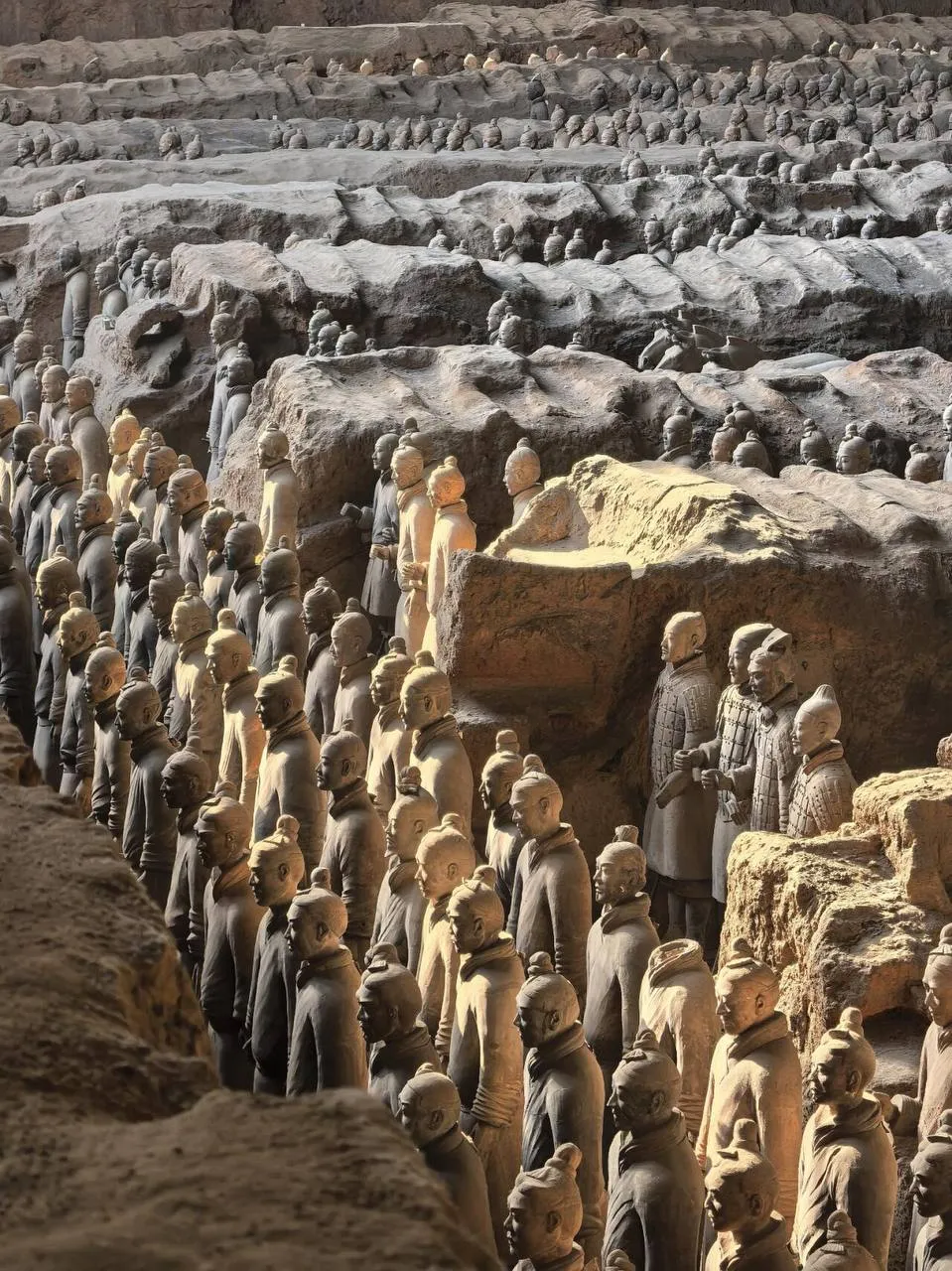
Xi'an is the city that made China. As the capital of 13 imperial dynasties across more than a thousand years, it is one of the oldest continuously inhabited cities in China and the origin point of the Silk Road. The Terracotta Warriors alone would justify a visit — 8,000 individually sculpted soldiers, each with a unique face, buried to guard an emperor's tomb that was only accidentally discovered in 1974. But Xi'an is more than one excavation site. The city walls, 14km of intact fortification dating to the Ming Dynasty, are the most complete ancient defensive walls surviving anywhere in China.
TL;DR — Quick Guide to Xi'an:
The food is a destination in its own right. The Muslim Quarter comes alive at night with the smell of lamb skewers, biangbiang面 (belt noodles), and the dense, sweet air of rou jia mo (Chinese burger) stalls. Xi'an is one of those rare cities where the food is almost argument enough to extend your stay.
Pit 1 alone contains 2,000 warriors and horses in formation. The level of detail — individual hairstyles, facial features, the traces of original paint — is genuinely humbling. Arrive before 8:30 AM or plan to stay until closing. Allow a minimum of 3 hours. The on-site museum explaining the 1974 discovery and the history of Emperor Qin Shi Huang is excellent and often missed by rushed visitors.
Fourteen kilometers of intact Ming Dynasty walls, 12 meters high, with a road wide enough to cycle or rent a tandem bike. The most complete ancient city walls surviving in China. Sunset from the top is spectacular — particularly from the south gate, where you can watch the last light catch the pagodas of the Big Wild Goose Pagoda in the distance while the old city below starts its evening food market setup.
A 64-meter Tang Dynasty pagoda built in 652 AD to house Buddhist scriptures brought from India by the monk Xuanzang. The square around the pagoda — especially at night when it is lit up — is one of the most atmospheric spaces in the city. The Tang Dynasty music and dance show at the nearby Shaanxi Grand Theatre is considered one of the best cultural performances in China.
March to May and September to November are ideal — temperatures 12-25°C, comfortable for cycling the walls and walking the archaeological sites. Spring brings cherry blossoms around the city walls and pagodas. Autumn is cool and clear. Summer (June-August) is hot (35°C+) and crowded with domestic tourists. Winter is cold (0-10°C) but the city is empty and the Terracotta Warriors have no queues.
Xianyang International Airport (XIY) is 40km northwest of the city center, connected by Metro Line 14 and an airport express bus. High-speed trains from Beijing take 4.5 hours on the fastest G trains; from Chengdu 4 hours; from Shanghai 6 hours. Xi'an Railway Station and Xi'an North Railway Station are the main arrival points. The city's Metro Lines 1, 2, and 4 connect most major tourist areas efficiently.
2–3 days minimum. The Terracotta Warriors alone warrant half a day. The city wall, Big Wild Goose Pagoda, and Muslim Quarter each deserve 3–4 hours.
The site itself is closed at night but the evening light show (《长恨歌》) in the park next to the warriors is highly recommended — it's one of the best stage performances in China.
Relatively. The city wall is a convenient oval that defines the city centre. The metro covers the main tourist areas. English signage is improving but less common than in Beijing or Shanghai.
The Muslim Quarter is the highlight — lamb skewers, persimmon cakes, roujiamo (Chinese burger), and hand-pulled noodles at very low prices. Chinese breakfast culture here is exceptional.
Yes, but it requires commitment — the round trip takes about 9 hours and Mount Hua's peaks are demanding. Most visitors do it as an overnight hike, staying in the peak-area hotels for sunrise.
Let us craft your perfect Xi'an itinerary — tailored to your interests and travel style.
Start Planning →