Zhangjiajie
Avatar's Hallelujah Mountains — Avatar Mountains & Glass Bridge
Avatar's Hallelujah Mountains — Avatar Mountains & Glass Bridge
Zhangjiajie is where China turns into pure landscape painting. The national park, a UNESCO World Heritage Site, is a 265-square-kilometer protected area of 3,000+ sandstone pillars — vertical rock formations that rise hundreds of meters above the forest floor and disappear into the clouds. The landscape inspired the floating mountains of Avatar; the Chinese name for the park is Wulingyuan. In the early morning, when mist fills the valleys and the peaks emerge from below like islands in a white sea, the landscape looks exactly as the Song Dynasty painters intended it.
TL;DR — Quick Guide to Zhangjiajie:
The experience is physically demanding — the park requires significant walking and climbing, with over 3,000 steps to the main viewpoints, and altitude above 1,200 meters. The reward is views that genuinely cannot be found anywhere else on earth. Most visitors spend two full days in the park, staying at the park entrance town of Wulingyuan, and emerge convinced this is one of the most extraordinary natural places in the world.
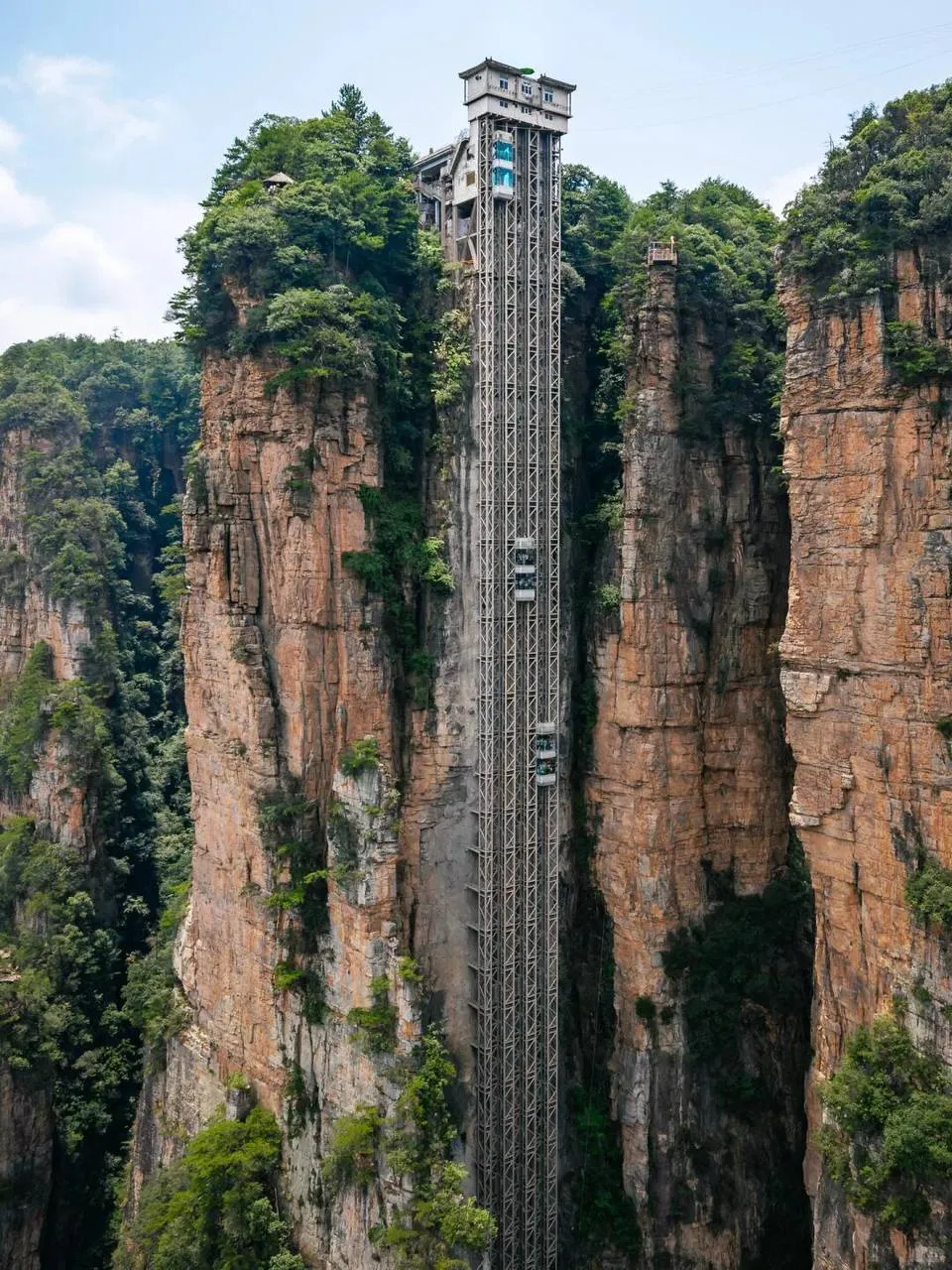
The UNESCO World Heritage Site covering 265 square kilometers of sandstone pillar landscape. The park is enormous — you cannot see it all in one day. The classic route starts with the Bailong Elevator (a 326-meter glass elevator built into the cliff face, one of the highest outdoor elevators in the world), takes in the Golden Whip Stream walk at the base, and climbs to the main viewing platforms at Yuanjiajie and Tianzi Mountain. Arrive at the park entrance before 7 AM to board the first buses and reach the main sites before 9 AM.
The world longest and highest glass-bottomed bridge, 430 meters long and 300 meters above the canyon floor. The bridge itself is slightly terrifying even for non-afraid-of-heights visitors — the floor is glass, the canyon drops below, and on a windy day the bridge moves slightly. The Grand Canyon below is equally dramatic and less visited than the main park. Allow a full afternoon for both the bridge and the canyon walk below, which involves a 90-minute descent through the canyon on a series of platforms and walkways.
The "Gate to Heaven" — a 99-bend mountain road leading to a 1,439-meter peak with the world longest cable car ascent (7km, 30 minutes), a glass skywalk along the cliff edge, and the famous 999 Steps leading up to the natural arch cave that gives the mountain its name. The mountain is separate from the national park and requires a separate ticket. The weather at the top is significantly different from the town below — colder, often cloudy, sometimes closed due to high winds. Check conditions before visiting.
April to June is the best season — the forest is lush and green, the rivers are full, and the mornings are often clear. Summer brings the most mist, which creates the famous floating peak effect but also reduces visibility for photography. Autumn (September to November) is the clearest and driest season, with the most reliable views. Winter is cold (below freezing at the peaks) and some upper platforms may be closed, but the park is dramatically uncrowded. Snow transforms the peaks into a white landscape that photography enthusiasts travel specifically to see.
Zhangjiajie Hehua Airport (DYG) is 5km from Wulingyuan town (the park entrance), a short taxi ride away. Domestic flights from Beijing, Shanghai, Guangzhou, and Chengdu are available. High-speed trains arrive at Zhangjiajie Railway Station from Changsha (3 hours) and further cities, though the route is mountainous and not all high-speed. The most dramatic approach is by road from Changsha through the Wuling Mountains — the scenery en route is nearly as impressive as the park itself. Private car with driver is the most comfortable option for the mountain roads.
3–4 days to really appreciate the Avatar mountains. Wulingyuan National Forest Park is vast — one full day is barely enough for the main attractions, and a second day reveals a completely different experience.
The 3,000+ sandstone pillars of Wulingyuan inspired the Avatar mountains. The park is UNESCO-listed and the world's first geopark. Morning mist makes the peaks look genuinely otherworldly.
The park involves a lot of walking and stair climbing. The Bailong Elevator (326m glass elevator ascending the cliff face) saves significant climbing time and is worth the queue. Fitness level matters.
April to October is peak season. Summer brings lush green peaks; autumn has misty mornings and golden foliage. Spring is also pleasant. Winter is less crowded but some attractions may close.
Yes — direct flights from Shanghai (2.5h) and Beijing (3h) are available. High-speed trains connect from Changsha (3h). Most visitors do Zhangjiajie as part of a wider Hunan province itinerary.
Let us craft your perfect Zhangjiajie itinerary — tailored to your interests and travel style.
Start Planning →